Kept for HR & People.
How things are actually done here lives in your people team. Three films on keeping the practice with the org.
All industriesFor executives
Culture is practice. Practice is memory. Keep it.
The handbook says what the policy is. Your people team knows how it actually works.
Read the film transcript
Narration from this original film. Soft instrumental music plays underneath.
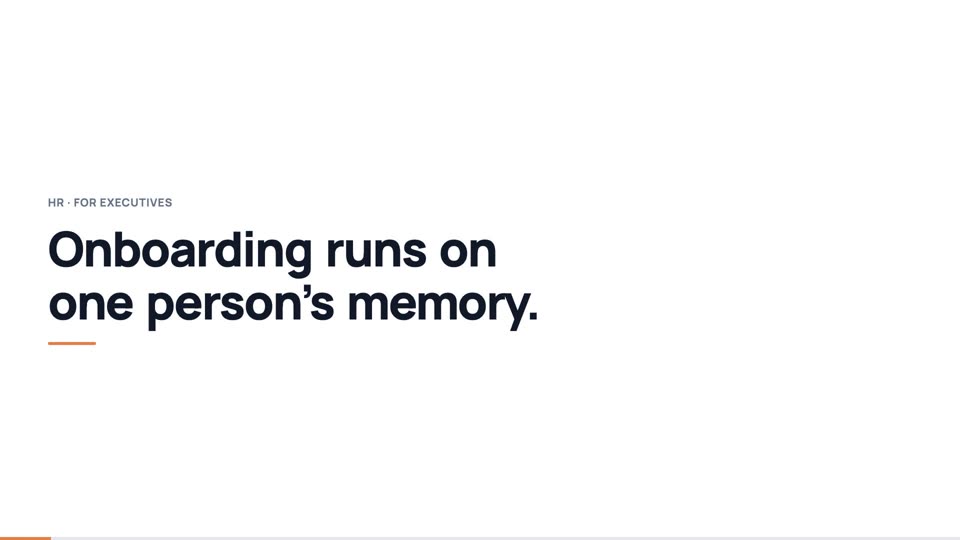
Onboarding runs on one person’s memory. When they’re out, the new hire’s first week stalls.
Every departure takes policy interpretation and role knowledge with it, and the next hire learns it slower and wrong.
Kept is a voice interview. June calls, asks about your work, and keeps what you say, in your words, in your knowledge base.
A new coordinator asks what a contractor conversion needs. Kept gives the three steps and cites the call where you explained them.
Role knowledge stays in the company when the person who held it moves on. Kept. Keep the knowledge behind the work.
Every people org holds practice the handbook cannot: how the review cycle really runs, what was learned from the reorg, why the leveling framework bends where it bends. When your senior practitioners leave, the org keeps the policies and loses the judgment that made them workable.
Kept captures that judgment from the people who hold it and keeps it cited, current, and owned by the workspace. The next people leader inherits how it is actually done, with names and dates, instead of a binder and a guess.
For managers
The review cycle runs on things nobody wrote down.
One person on your team knows how the comp cycle actually goes. That person would like a vacation.
Read the film transcript
Narration from this original film. Soft instrumental music plays underneath.
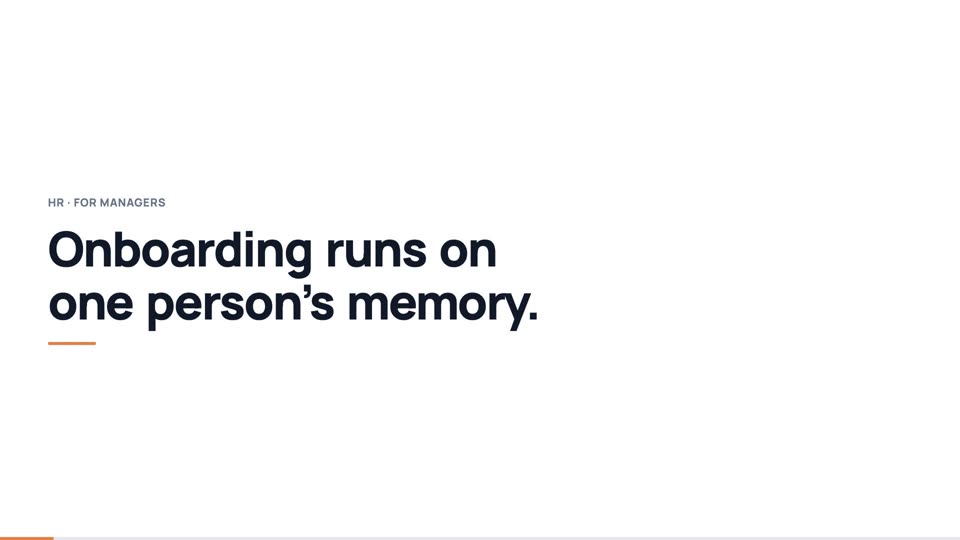
Onboarding runs on one person’s memory. When they’re out, the new hire’s first week stalls.
You answer the same approval question every week, and it still gets escalated back to you.
Kept is a voice interview. June calls, asks about your work, and keeps what you say, in your words, in your knowledge base.
A new coordinator asks what a contractor conversion needs. Kept gives the three steps and cites the call where you explained them.
The approval questions stop landing on your desk twice. Kept. Keep the knowledge behind the work.
The people calendar looks documented until the person who runs it is out. Then the questions start: the order of operations, the manager who needs early warning, the edge case from last cycle and how it was handled. The process is fine. The knowledge of the process is a single point of failure.
Kept interviews your team about how the work really goes and keeps it in their words, cited and searchable. Coverage becomes real, handoffs keep their judgment, and the answers stay when people move on. You see what is kept. It never rates the people who kept it.
For partners
The hardest parts of your job are the parts nobody sees.
The way you handle the delicate conversation is craft. It deserves to outlive your tenure, on your terms.
Read the film transcript
Narration from this original film. Soft instrumental music plays underneath.
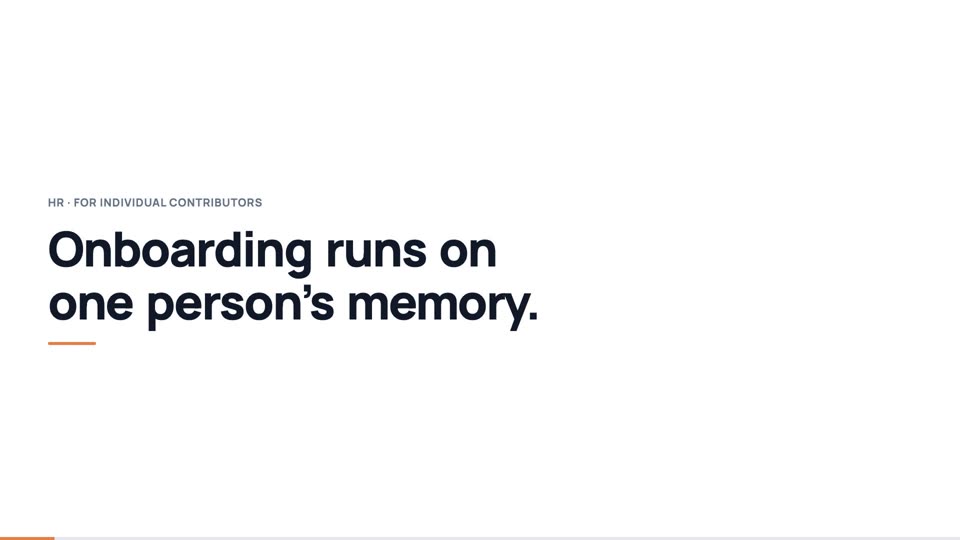
Onboarding runs on one person’s memory. When they’re out, the new hire’s first week stalls.
Your first month is spent finding out who to ask before you can find out what to do.
Kept is a voice interview. June calls, asks about your work, and keeps what you say, in your words, in your knowledge base.
A new coordinator asks what a contractor conversion needs. Kept gives the three steps and cites the call where you explained them.
You get the real process, exceptions included, on day one. Kept. Keep the knowledge behind the work.
Kept talks with you about how you work: the sequencing, the phrasing, the judgment about when to push and when to wait. It keeps your craft in your words, so the team's practice compounds instead of resetting with each departure. What you have learned becomes something you visibly gave.
Capture starts with each partner's consent. They can skip a question, stop a session and review their captured knowledge. A business workspace's access rules determine who else can use it.
Knowledge captured for a business workspace belongs to that workspace. Partners retain visibility, removal from view and in-session retraction controls. Permanent deletion follows the workspace request process, unless a provisioned legal erasure window applies.
Kept's internal partner model is not employer-facing. A business workspace can see a red, amber or green capture band, based on contributed knowledge, alongside the access and audit records described in the Privacy Notice. It is not a score of a person's work or judgment.
Where it starts in hr & people.
One process, one question the team already asks.
Start at zero.
Pay once when the KPIs land.
The KPIs we would propose for a hr & people team:
- Knowledge kept per departing partner before their last day, by topic
- Questions the replacement asks in their first 60 days that are answered with a source
- Roles in scope moving from a thin band to a covered band over the window
- Topics with a kept, cited answer, against topics with none
Agreed before the pilot starts and measured from the workspace's own ledger over a window we set together, with a minimum number of partners using Kept through it. Nothing to pay to begin. A one-time payout when the KPIs are met, then the recurring rate.
How the proof of value worksUseful knowledge.
Visible limits.
Kept supports the work. It does not assess competence, monitor people or replace training, supervision or required qualifications. Business knowledge follows workspace access and ownership rules.
Kept is designed to ground answers about your work in available sources and say when it does not know. AI can still make mistakes. Inspect the sources and review important answers before relying on them.
Security and compliance